When it comes to creating tools, some people just don’t get it.
Consider this continuum. At the left end, man does everything. And at the right end, the tool does everything. The fundamental decision a tool designer needs to make is – Where to draw the red line! How much should the tool do?
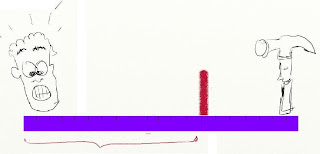
Its an evident fact that the more the tool does, the successful it becomes. "Human shall sweat less" is the design mantra. Google is one good example. The engine keeps watching your activities and understands your preferences. The inferred profile is then used to make the search results personalized for you. You are not expected to describe about yourself anytime anywhere.
Now, I am ok if you make the tool do a very minimum initially. The bottom line is - it has to be a decent amount of function, well defined, well delivered and well composable. Like a motor. It makes a decent part of many big systems, composed of many such parts.
And the intelligent of creators further take effort to make the tool open for future expansions. And the wisest of them make the tools open for expansion, not by the creator but by the end users themselves. This is what we call leveraging the ‘emergent behavior’. Tools like Facebook and Twitter are not accidental hits. They are created by clever engineers who consciously exploit this emergent behavior.
So that is that.
Consider this continuum. At the left end, man does everything. And at the right end, the tool does everything. The fundamental decision a tool designer needs to make is – Where to draw the red line! How much should the tool do?

Its an evident fact that the more the tool does, the successful it becomes. "Human shall sweat less" is the design mantra. Google is one good example. The engine keeps watching your activities and understands your preferences. The inferred profile is then used to make the search results personalized for you. You are not expected to describe about yourself anytime anywhere.
Now, I am ok if you make the tool do a very minimum initially. The bottom line is - it has to be a decent amount of function, well defined, well delivered and well composable. Like a motor. It makes a decent part of many big systems, composed of many such parts.
And the intelligent of creators further take effort to make the tool open for future expansions. And the wisest of them make the tools open for expansion, not by the creator but by the end users themselves. This is what we call leveraging the ‘emergent behavior’. Tools like Facebook and Twitter are not accidental hits. They are created by clever engineers who consciously exploit this emergent behavior.
So that is that.
Which tool will you declare as your proudest creation? - Spidey
ReplyDeleteI have none, Spidey. But will create one before I die :)
ReplyDeleteWhat tool pissed you off so much as to the the "people just don't get it" comment - trying to ponder the flip side of google/fb examples.
ReplyDeleteBTW, I though the design mantra was: how can we package this so that people pay for it without knowing that they are paying for it:-)
@ Anty : Can't exactly discuss that here. Over phone! LOL! That design mantra! Probably, it works the best when dealing with simpletons and suckers.
ReplyDelete